

👋 ASB Partners Nuggets
This is a short weekly email that covers a few things I’ve found interesting during the week.
Quote of the Week
“Humor was another of the soul’s weapons in the fight for self-preservation. It is well known that humor, more than anything else in the human make-up, can afford an aloofness and an ability to rise above any situation, even if only for a few seconds”
Viktor Frankl
Interesting Links/Reads
Many links are sourced from Marginal Revolution (bold and italics are my own to highlight what I found particularly interesting)
Mexico (Taiwan) fact of the day
Mexico has quietly become a cornerstone of the AI boom, providing 40 per cent of US imports this year of the computer servers that are widely used in the data centres powering artificial intelligence.
Taiwanese manufacturers are rapidly expanding factories in Mexico to assemble servers, which are now the country’s top US export, overtaking autos that dominated its trade for decades.
Mexico is the second-largest provider of enterprise servers to the US so far this year, with sales reaching $46.9bn, behind Taiwan, which sold $53.5bn, though Mexico became the largest on a monthly basis in May.
The phenomenon is helping prop up Mexico’s limp economy, pushing the country’s exports to record levels. Servers and related hardware made up almost one-fifth of the $317bn of goods Mexico exported between January and May, more than double the same period a year earlier. Taiwan, in turn, is now Mexico’s third-largest trading partner, up from eighth place in 2022. Taiwanese companies have spent more than $1.6bn since 2020 on Mexican factories that offer geographic proximity and tariff-free access to US tech giants spending hundreds of billions on data centres.
“Mexico is of tremendous importance to the way this new AI-powered economy is working,” said Jesse Rogers, head of Latin America economics at Moody’s Analytics. “It is really a new frontier of collaboration and even dependency on the Mexican economy when it comes to AI servers.”
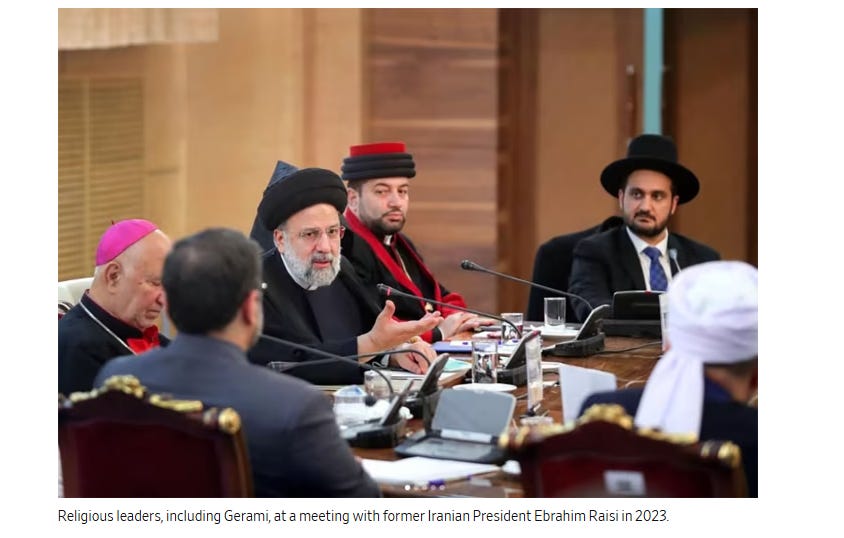
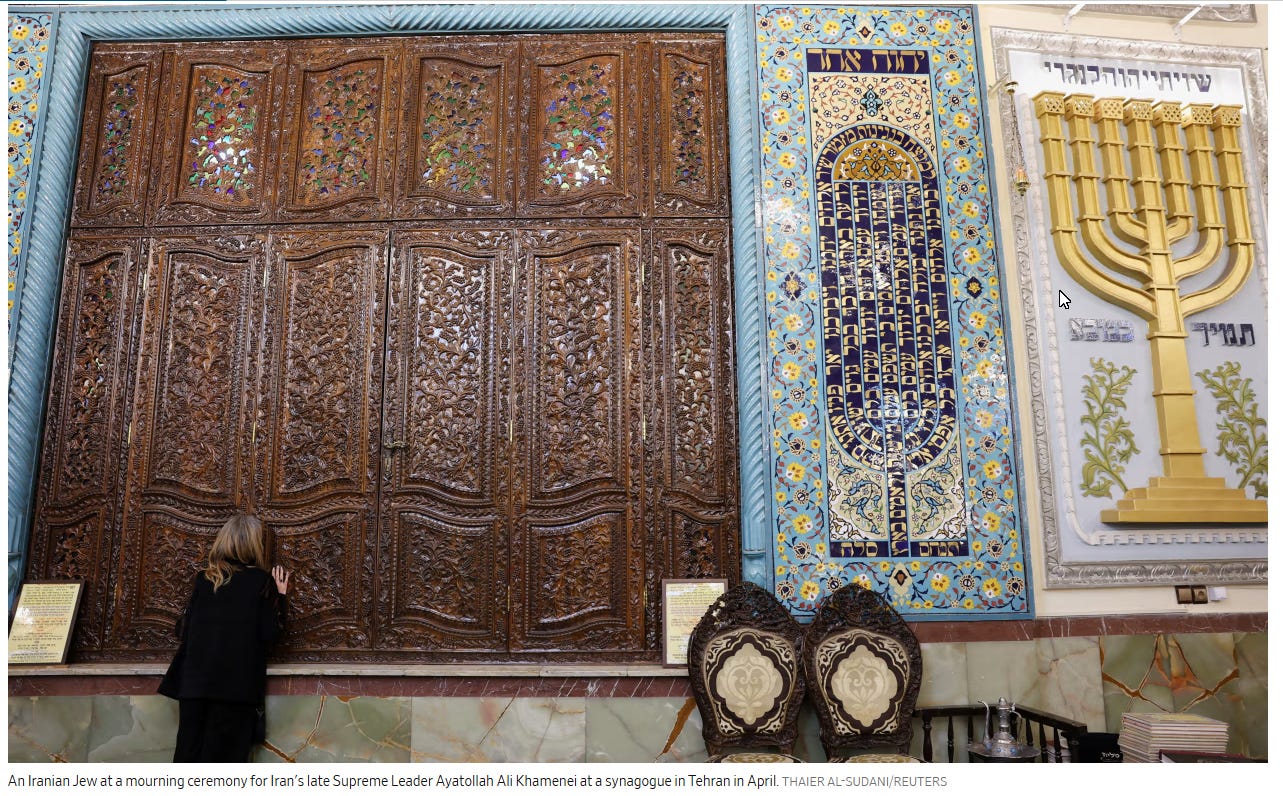
Abrishami is one of about 60 active synagogues in Iran, for which Gerami serves as chief rabbi. His community lives in constant tension between its Jewish identity and the demands of the Islamic Republic, seeking to pursue religious beliefs without being seen as challenging the regime. War with Israel and the U.S. only complicates that.
Gerami, an Iranian who is also a U.S. citizen, often encounters people outside Iran who are stunned to learn that the country—which refuses to recognize the state of Israel and has criminalized contact with it—has rabbis at all, much less a devout Jewish community. Gerami estimates Iran has around 20,000 Jews, although others think it has many fewer.
Still, the community has shrunk from more than 100,000 before the Islamic Revolution in 1979 and faces painful restrictions. They are forbidden from contact with relatives and friends in Israel, and can’t visit the country, home to Judaism’s holiest sites. Contact with Jews in the U.S. beyond family and close friends is frequently difficult.
The restrictions “put people under stress” but the community can overcome them, Gerami said.
Gerami, born in Tehran seven years after the Islamic Revolution, lived and conducted religious studies in Jerusalem and Baltimore. He has served as Iran’s chief rabbi since 2011.
Iran’s culture is an ethnic and linguistic patchwork of 92 million people, far more diverse than the image presented to the world by Tehran’s repressive, hard-line Shi’ite regime.
Khomeini cut ties with Israel, labeling it Little Satan, alongside the Great Satan, America. He gave Israel’s embassy—a short walk from Gerami’s Abrishami Synagogue—to the Palestine Liberation Organization.
“Suddenly, from good relations with Israel and regular flights to Tel Aviv, you saw Yasser Arafat being welcomed as the first guest after the revolution,” recalled Meir Javedanfar, who grew up in Iran and now teaches Iranian
Gerami said the alliance of rabbis in Muslim countries, which range from Albania to Nigeria to Uzbekistan, helps to put his situation in perspective. Rabbi Mendy Chitrik, who chairs the alliance, said, “Every country is different, and Iran certainly has its own realities. But when we get together, we realize many of the challenges are shared.” politics at Reichman University in Israel, referring to the late PLO leader.
Iran’s remaining Jewish community has gradually grown more Orthodox, say people familiar with it, which some say has won it a degree of respect from the theocratic regime. Gerami’s synagogue renovated its facilities over recent years.
Kermanian said the Federation of Iranian Jews has documented 17 executions of Jews since 1979 and a dozen Jews have disappeared, he said, mainly in the early years of the regime. The estimated number of arrests is around 2,000, he said, but many of them were for reasons that weren’t explicitly political. In 1999, the regime detained 13 Iranian Jews on charges of spying for Israel and quickly convicted 10 of them, who were later released under international pressure.
3.The Question They Cannot Answer How and why I opened a very ugly can of worms Russ Roberts
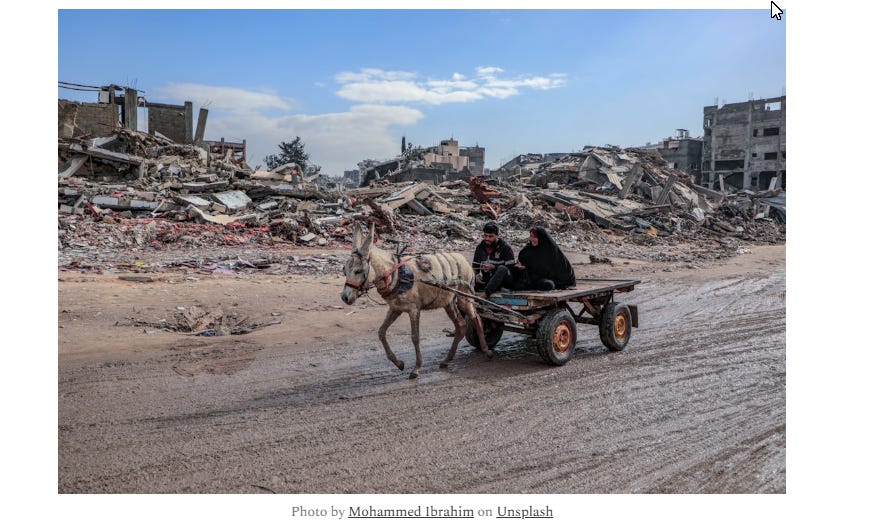
. This is the question I asked those who called me a monster or a child-killer when I had the gall—the chutzpah!—to suggest Israel has not commited genocide in Gaza.
This is the question. If 250 of your friends and neighbors were kidnapped and held below ground, starved (actually starved) and presuming (correctly as it turns out) that many of them were sexually abused, what would you have done? What would you have done, knowing that Hamas had dug tunnels under hospitals and schools where those people were being held? You claim that what Israel has done is genocide. What would you have done?
They never answer. I’m not saying there isn’t an answer. Maybe some people have answered it. I’m saying that I never get an answer. There is an implicit answer—Israel should have done something else, anything else, other than what it did. What that something else is, they do not elaborate. I understand the impulse.
I wish October 7th never happened. But it did. I wish that once it happened, the world had risen up and instead of tearing down the posters of Israeli men, women, and childen being held in tunnels, they had put up a bunch of their own posters. I wish the world (and not just the Jews and our stalwart but small group of friends) had demanded the release of the hostages . I wish the world had isolated Iran and Qatar for their support of Hamas and said that’s over and put sanctions on Qatar instead of seeing them as a useful intermediary. If we had lived in that world, I don’t think Gaza would look like it does today and a lot of people would still be alive. I wish that world were possible. Evidently not. It’s easy to dislike the world we live in, but its’ the world we live in. Tell me what Israel should have done given the way the world actually is.
War is hell. Urban war is even worse. Urban war with an adversary holding the children of your neighbor hostage below ground is worse still. And the worst thing of all is to face an adversary who sees the death of their neighbors as a feature not a bug, an adversary who created the greatest bomb shelters in the world and refused to let their neighbors use them.
So yes, we devasted the buildings of Gaza, often after warning the people who lived there that we would do so. It’s horrible. Innocent people died. Innocent people lost their homes. And that leads to the other unanswerable question. What has happened in Gaza is a terrible tragedy. But I often ask those who accuse Israel of genocide, OK, whatever you want to call it, it’s awful. I’m with you there. But does Hamas bear any of the responsibility for that tragedy? And they are almost always silent though they will occasionally concede that October 7th was a bad thing. But they say nothing about holding Hamas responsible for what happened after October 7.
If you accuse Israel of genocide, if you cannot tell me what Israel should have done instead of what it has done in Gaza after October 7th, and if you cannot bring yourself to condemn Hamas for the suffering of the people of Gaza, then I’ll say it again: you have picked the wrong side.
5.OpenAI 37-minute talk on the Book of Exodus.
Podcasts/Videos I’ve watched during the week
👇My first exposure to Doomberg…makes a lot of sense, especially the US Treasury intervention into the Japanese Currency…. Did we just witness QE 2.0 and no one noticed?
I hope you enjoyed it.
Adam